
Sales needs an email. Another department wants a social post. The content calendar has gaps, and someone is asking why you haven’t published anything today.
It is easy for marketing to become a response to everyone else’s requests. Somewhere between the deadlines and approvals, the reason for communicating gets lost.
As Michael Younger, Head of Marketing at Treetops Hospice, put it: “If you’re the marketing team, actually everyone’s priority becomes the number one priority.”
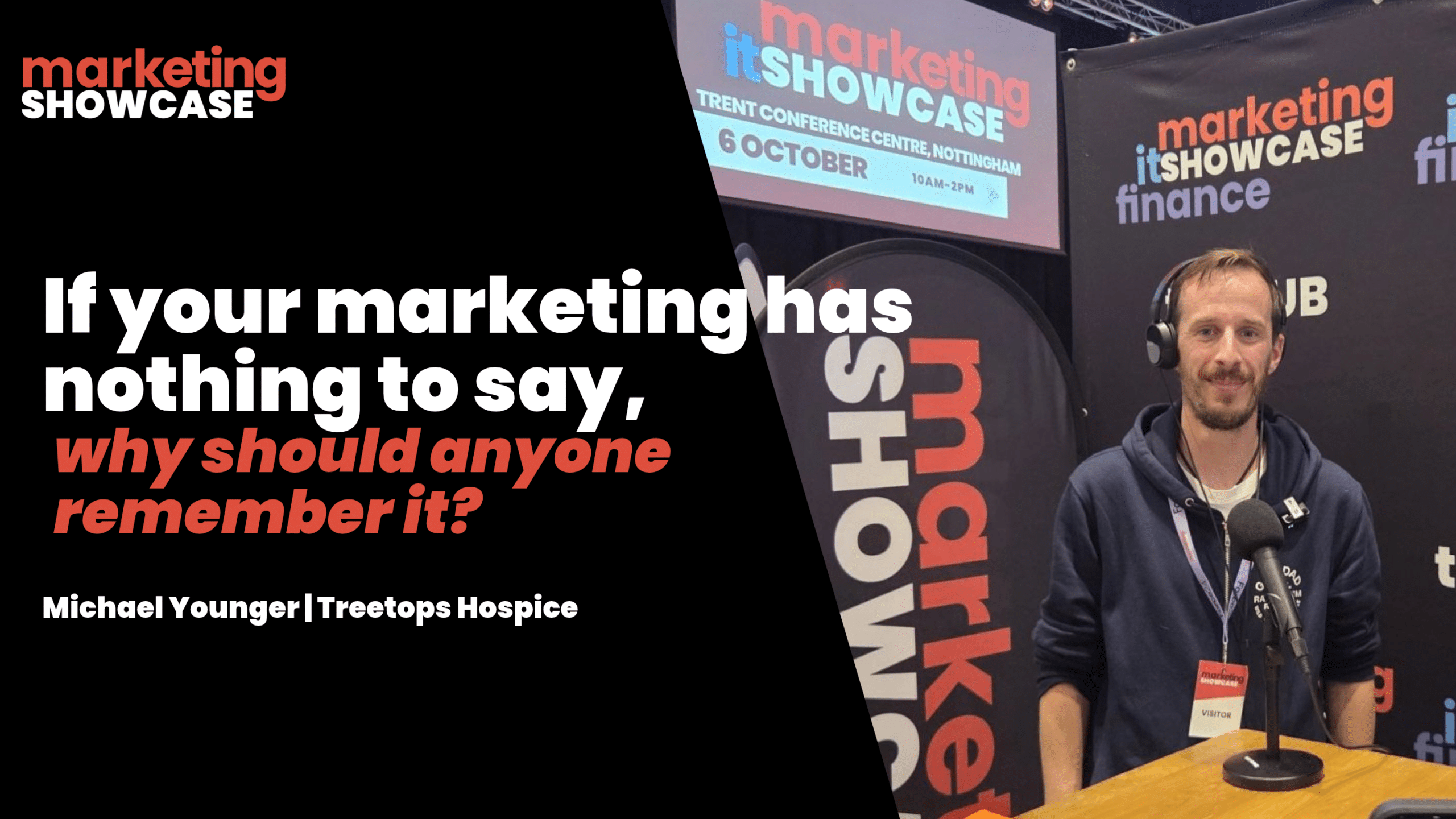
Joining the marketingSHOWCASE podcast at our Nottingham event, Michael made the case for giving content a clear purpose and being honest enough to say something that matters.
Start with something worth saying
A full calendar tells you that content is going out. It tells you very little about why anyone should care.
The pressure to keep publishing can leave teams repeating familiar messages without considering what they want the audience to think, feel or do.
Before drafting the next post, finish this sentence: We want someone to read this and…
If the answer is unclear, the brief needs more work. Perhaps the content should answer a difficult question, explain a decision or help someone understand an experience. Having that purpose makes it easier to decide what belongs in the message.
It also gives marketing managers a useful way to handle competing requests: what will this communication achieve for the person receiving it?
Honest stories give people something to connect with
During a new nurse’s induction at Treetops Hospice, she recalled a family story the charity had shared previously, without anyone prompting her.
It concerned a young father approaching the end of his life and the things he had done to make memories. The story had stayed with her. It had also affected Michael personally as a father.
Its strength came from the real experience at its centre. It communicated something meaningful about the people receiving the hospice’s support.
Honest marketing can mean allowing a difficult subject to remain difficult. Giving it a reassuring headline or a familiar stock image may make publication feel more comfortable, but can lose what makes the story matter.
Have the confidence to be specific
“We’re all scared to take a risk,” Michael observed. That hesitation is understandable when your organisation’s reputation is part of your responsibility.
But there is room for a clear point of view that you can explain and support. As Michael stressed, “I’m not talking clickbait.”
For your next campaign, ask what your organisation can say from experience. What do customers misunderstand? What question keeps coming up? What truth would help your audience, even if it feels awkward to discuss?
Those answers offer a stronger starting point than another request to “post something”.
Give every piece a reason to exist
Michael’s advice to “Design for recall, not for reach” is a useful challenge for the next planning meeting.
Agree what you want people to remember, then build the content around it. Give your team time to find the story, evidence or experience that makes the message worth their attention.
Listen to Michael’s full podcast conversation for more honest reflections on marketing, or join us at an upcoming marketingSHOWCASE event.