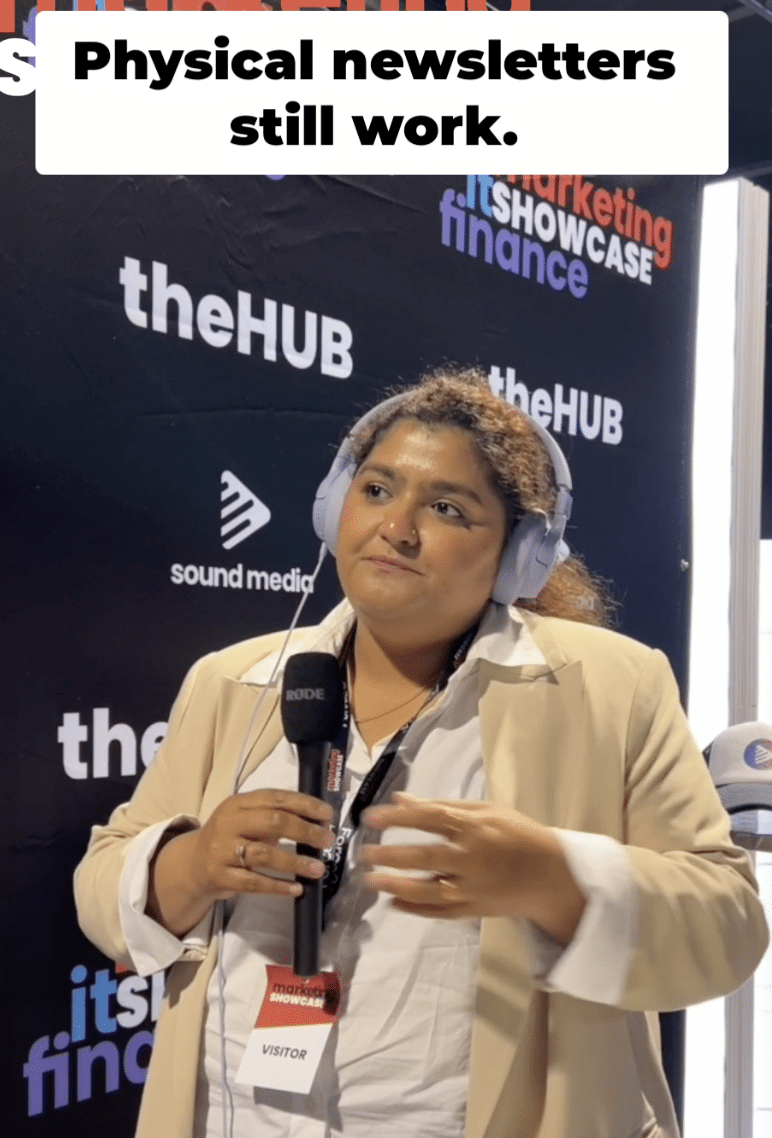
Marketing is dominated by lengthy social feeds, AI-generated content, and ever-changing algorithms. And the humble newsletter is not just surviving – it’s thriving. But what about the physical newsletter? Is there still a place for paper on the doormat when our inboxes are digital?
We recently sat down with Rashi, Communications and Fundraising Coordinator at the international development charity Good Neighbours UK, on the marketingSHOWCASE podcast – to discuss why newsletters are a true powerhouse that has ‘outlived so many other things that have come and gone’. The answer lies in intentionality and the powerful, forgotten element of physical connection.
1. Building an Intentional Relationship
In Rashi’s view, the power of a newsletter – whether delivered digitally or physically – is the intentional relationship you build with your audience.
On social media, brands are constantly shouting or projecting themselves, operating at the mercy of a volatile algorithm. The newsletter, by contrast, is an inherently personal and humble effort. When a subscriber invites you into their inbox or their home, you become a guest in that space, and you must respect it. This shift from a public loudspeaker to a private conversation changes the core of the message, demanding authenticity and focus.
In an age of “fast-moving” social media and AI tools that make content creation ubiquitous, the newsletter—especially in its physical form—remains a sustainable powerhouse. It shifts the marketing goal from chasing an algorithm to nurturing a one-on-one relationship, proving that sometimes, the oldest tools are the most effective.
2. The Unignorable Power of Physicality
While many marketers have abandoned print, Rashi’s team at Good Neighbours UK still produces a physical newsletter—and this is a critical differentiator.
- Tactile and Memorable: The physicality of marketing cannot be disengaged or ignored. Something that is physical and tactile aids memory and recognition, helping to showcase the organization’s brand, logo, and overall look.1
- Gaining Access: Sending something that is physically seen gives you access to a donor’s door, cutting through the digital noise precisely because fewer people are doing it. Rashi referenced the Postcode Lottery as a prime example of a brand leveraging consistent design and physicality for instant recognition.
3. Storytelling, Honesty, and the CTA Balance
When you are a guest in a person’s attention span – the new currency – your communication must be valuable. Storytelling is key to building that relationship, especially for an organisation like a charity.
Instead of grand, boastful claims, the focus must be on showing impact in the most honest and truthful manner. For example, instead of claiming to solve a major crisis, the communication focuses on the story of 1,200 people in a remote village whose daily lives were made easier by a specific donation.
Furthermore, Rashi advises that the call-to-action (CTA) or “the ask” should never be hidden. Honesty is paramount: “I am a charity. I work on fundraising and donations,” she stated, emphasising that if you are honest, donors who feel a connection will contribute without being guilt-tripped or tricked.
In an age of “fast-moving” social media and AI tools that make content creation ubiquitous, the newsletter – especially in its physical form – remains a sustainable powerhouse. It shifts the marketing goal from chasing an algorithm to nurturing a one-on-one relationship, proving that sometimes, the oldest tools are the most effective.
Want to know more about marketingSHOWCASE, theHUB – or both? Check out or shows here and our podcasts and more here
See you at one of our events soon?